
Which Brand Is Right for You?
Both Adidas and Brooks make excellent running shoes. The problem is they make them for very different runners — and buying the wrong one means spending $130–$160 on something that sits in the closet after three runs.
This comparison cuts through the brand-level marketing and gets to what actually matters: which shoe works for your foot, your pace, and how you train. We cover specific models, real differences in fit and feel, and who each brand genuinely suits.
The short answer — who each brand is for
Choose Brooks if: you prioritize comfort and reliability over everything else, you run long distances at a steady pace, you have wide feet or need multiple width options, or you’re a new runner who wants a forgiving, low-maintenance shoe that just works.
Choose Adidas if: you want more energy return and a snappier, more responsive ride, you care about how the shoe looks off the road, you’re a neutral runner with a standard or slightly narrow foot, or you want a versatile shoe that works for both training and everyday wear.
Cushioning and ride feel
This is where the brands diverge most clearly.
Brooks uses DNA Loft foam — a nitrogen-infused compound that delivers a soft, smooth, and consistent ride. It’s not exciting underfoot, but that’s the point. You lace up a Ghost or a Glycerin and just run. There’s no adjustment period, no overly firm break-in, and no drama at mile 15. The cushioning is protective and predictable, which is exactly what long-distance runners want.
Adidas Boost foam — the technology in the Ultraboost and several other models — is bouncier and more energetic. You feel a noticeable return of energy with each stride, which makes training feel slightly more effortless at faster paces. The trade-off is that Boost can feel slightly less stable than Brooks under longer, slower miles, and the firmer, springier sensation isn’t for everyone.
For easy and long runs, Brooks edges ahead on pure comfort. For tempo work and varied-pace training, Adidas’s more responsive foam suits runners who want to feel the ground more.
Fit and sizing — the biggest practical difference
This matters more than most comparison articles admit.
Brooks sizes consistently and offers multiple widths — regular (D for men, B for women), wide, and extra wide. If you have wide feet, have struggled to find running shoes that don’t pinch, or your current shoe leaves red marks across the top of your foot, Brooks is worth trying first. The Ghost and Adrenaline in particular fit a wide range of foot shapes without feeling sloppy.
Adidas runs narrow and tends to run small. It’s standard advice in running stores to size up half a size in most Adidas models. If you have a narrow foot and like a snug, locked-down feel, this works in your favour. If you have a standard or wide foot, you’ll likely find Adidas uncomfortable on runs over an hour.
Best Brooks shoes for runners in 2025
Brooks Ghost 17 — best all-round daily trainer
The Ghost is consistently one of the best-selling performance running shoes on the market, and the Ghost 17 continues the formula with a nitrogen-infused DNA Loft v3 midsole, a reduced heel drop (now 10mm, down from 12mm on the Ghost 16), and a more breathable double jacquard mesh upper. It suits neutral runners who want a reliable, forgiving shoe for everyday miles. True to size, available in multiple widths, and durable enough for 400–500 miles.
Brooks Adrenaline GTS 24 — best for mild overpronation
The Adrenaline is Brooks’s stability workhorse, using GuideRail technology to provide light support without the stiff, brick-like feel of older stability shoes. It’s the go-to recommendation for runners whose knees or ankles tend to roll inward slightly. Firmer than the Ghost, but still comfortable for daily use. Widely available in multiple widths.
Brooks Glycerin 22 — best for long distances and maximum cushioning
The premium end of Brooks’s daily trainer lineup. The Glycerin 22 uses a dual-density DNA Tuned midsole — firmer in the forefoot, softer through the heel — for a cushioned ride that holds up over marathon-length efforts. If the Ghost is Brooks’s reliable workhorse, the Glycerin is the comfortable long-haul option. Best for easy and long runs rather than faster work.


Last update on 2026-09-29 / Affiliate links / Images from Amazon Product Advertising API
Best Adidas shoes for runners in 2025
Adidas Ultraboost 5X — best for versatility and all-day comfort
The Ultraboost is Adidas’s best-known running shoe and arguably the most versatile shoe in their lineup — genuinely comfortable for both training runs and extended daily wear. The Boost midsole provides excellent energy return, and the Primeknit upper fits like a sock. It runs narrow, so size up half a size if you’re between sizes. At $190, it’s on the premium end, but the build quality justifies it for runners who want one shoe that does everything.
Adidas Adizero SL2 — best value performance trainer
If the Ultraboost feels like too much money for a training shoe, the Adizero SL2 is Adidas’s standout value option at $130. It uses a lighter, more responsive foam than the Ultraboost and is better suited to runners who want a shoe that encourages faster paces without the carbon-plate price tag. One of the most talked-about trainers of 2025 for runners who want race-adjacent feel in a daily shoe.
Adidas Supernova Rise — best budget Adidas daily trainer
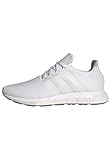
The most accessible entry point in Adidas’s running lineup. The Supernova Rise uses PEBA-based foam for a softer, more cushioned feel than older Adidas budget models, and it sits in the same category as the Brooks Ghost for pure daily training use. Brooks Ghost testers generally give the Ghost a slight edge on rolling transitions, but the Supernova Rise is a legitimate option if you’re buying your first pair of performance running shoes and want to stay under $120.




Last update on 2026-09-29 / Affiliate links / Images from Amazon Product Advertising API
Adidas vs Brooks for distance running specifically
For half marathon and marathon training, Brooks has the stronger track record. The Ghost and Glycerin series are built for exactly this use case — high weekly mileage, consistent pacing, long Sunday runs. The DNA Loft foam holds up well over distance without breaking down, and the wider fit options reduce the chance of hotspots appearing at miles 18–20 when feet swell.
Adidas competes at the top end with carbon-plated race shoes like the Adizero Adios Pro 4, which delivers genuine performance gains for runners chasing marathon PRs. For training leading up to a race, many runners combine Adidas race shoes with Brooks trainers — using the Brooks for easy and long runs to protect their legs, and the Adidas racer on race day.
If you’re only buying one shoe for distance training, Brooks is the safer choice for most runners. If you’re building a rotation or targeting a race time, Adidas at the performance end is worth the investment for race day.
Price comparison
Brooks daily trainers run $120–$160 for the Ghost and Adrenaline series, and up to $175 for the Glycerin. Adidas daily trainers start around $120 for the Supernova Rise, hit $130–$140 for the Adizero SL2, and climb to $190 for the Ultraboost. Both brands sit in a similar range for everyday trainers.
Where they diverge is at the top end — Brooks performance racers top out around $250 (Hyperion Elite 5), while Adidas carbon racers like the Adios Pro 4 sit in the same range. Neither brand is dramatically cheaper than the other for comparable shoes.
Side-by-side summary
| Brooks | Adidas | |
|---|---|---|
| Cushioning feel | Soft, smooth, consistent | Bouncy, energetic, responsive |
| Fit | Multiple widths, consistent sizing | Narrow, size up half a size |
| Best for | Long runs, daily training, wide feet | Tempo runs, versatile wear, style |
| Distance running | Excellent | Good (exceptional at race-shoe tier) |
| Price range | $120–$175 (trainers) | $120–$190 (trainers) |
| Off-shoe style | Functional, understated | Fashion-forward, lifestyle crossover |
| Durability | 400–500 miles typical | 400–500 miles typical |
The verdict
If you run more than three times a week, prioritize comfort on long runs, or have feet that are anything other than narrow, start with Brooks. The Ghost 17 in particular is one of the most reliably good running shoes available at any price point — it suits beginners and experienced runners equally, holds up well over high mileage, and doesn’t ask much of you to get the most out of it.
If you want more energy underfoot, run at varied paces, or genuinely care about wearing your training shoes outside of running, Adidas earns its place. The Ultraboost in particular is one of the few running shoes that works as well on a commute as it does on a 10K.
For distance runners building toward a race, the combination that gets recommended most often is Brooks for training and Adidas (or another brand’s carbon racer) for race day. Both brands earn that kind of respect for a reason.
Looking for a structured training program to go with your new shoes? Our Dynamic Runner Club review covers one of the most talked-about running apps for everyday runners who want to improve without guesswork.