
Why foam rolling belongs in every athlete’s recovery routine
Regardless of the sport — running, cycling, golf, skiing, pickleball — the physical demands are the same at the fundamental level: repeated stress on specific muscle groups, accumulated tightness that reduces mobility over time, and the constant need to recover well enough to train again. Foam rolling addresses all three in one tool, in your own time, for a fraction of the cost of regular massage therapy.
The research supports consistent use. A study published in the Journal of Athletic Training found that foam rolling reduced delayed onset muscle soreness and associated performance decrements following intense exercise. More practically, athletes who roll consistently maintain the tissue quality that keeps them training — not as an emergency intervention when something hurts, but as a daily habit that prevents the gradual accumulation of tightness that leads to injury.
This guide covers everything you need to choose the right tool for your sport and experience level — from a $15 budget roller that outperforms its price to premium vibrating options for serious athletes.


Last update on 2026-09-18 / Affiliate links / Images from Amazon Product Advertising API
How to choose the right foam roller — the key variables
Density is the most important variable. Soft rollers are forgiving — good for beginners, post-race recovery, or acutely sore muscles where aggressive rolling would cause protective guarding that eliminates most of the benefit. Medium density is the sweet spot for most athletes: firm enough to reach deeper fascial layers while still allowing relaxation into the pressure. Extra-firm or high-density rollers are for experienced users with adapted tissue who need more intensity to produce a response.
The practical test: if you tense up and hold your breath while rolling, the roller is too firm for where you are right now. Effective foam rolling should be uncomfortable but tolerable — the kind of discomfort that resolves as the tissue releases, not the kind that makes you brace harder.
Texture determines how targeted the pressure is. Smooth rollers deliver even, distributed pressure across the full contact area — ideal for beginners and large muscle group work. Textured rollers — grid patterns, ridges, knobs — concentrate pressure at specific zones to reach deeper trigger points. For athletes with chronic tightness in specific areas (IT band, calves, glutes), a textured surface produces results a smooth roller can’t match.
Length determines versatility. A 36-inch full-length roller handles the back, quads, and hamstrings comfortably. A 13-inch compact roller is more portable and easier to maneuver on calves, IT bands, and smaller muscle groups. Most serious athletes end up owning both.
Vibration adds meaningful benefit for athletes who already foam roll regularly. The vibration overrides the protective muscle tension that can make rolling uncomfortable, allowing the roller to reach deeper tissue more effectively. At 3–4x the price of standard rollers, vibrating options are a worthwhile upgrade for athletes who use their roller daily rather than an essential purchase.
Best foam rollers for beginners and general fitness
New to foam rolling, or looking for a reliable all-purpose option at an honest price? The two most recommended entry-level rollers are simple, durable, and do exactly what they claim.
The Amazon Basics High-Density Round Foam Roller in 36-inch is the benchmark budget option. Consistent, reliable pressure across large muscle groups — quads, hamstrings, back — at a price that makes it easy to have one at home and one at the gym. No frills, no hollow core, no texture variations — just firm, even compression from a roller that holds its shape over years of use. For athletes who want a first foam roller without overthinking it, this is the answer.
The ProsourceFit High-Density Roller is essentially the same tool available in multiple lengths — 12-inch, 18-inch, and 36-inch — which makes it useful for athletes who want different sizes for different purposes. The 12-inch is particularly portable for travel to races and away games.


Last update on 2026-09-18 / Affiliate links / Images from Amazon Product Advertising API
Best foam rollers for intermediate and advanced athletes
The TriggerPoint Grid is the most universally recommended foam roller across sport disciplines, physical therapy clinics, and serious athletic programs. Its multi-density grid surface — flat zones, channel zones, and raised zones — mimics the varying pressure of a massage therapist’s hands and reaches deeper tissue than smooth rollers can. The hollow core maintains its shape through years of heavy use. At 13 inches it’s compact and portable, and it handles calves, IT bands, quads, hamstrings, and glutes with equal effectiveness.
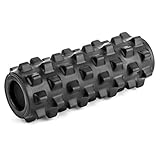
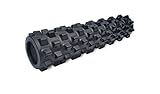
The RumbleRoller is the step up in intensity — firm, rounded bumps that compress and release tissue aggressively. Not recommended as a first roller, but for experienced athletes who feel they’ve plateaued on standard textured rollers, the RumbleRoller reaches tissue that other options can’t. Available in standard and extra-firm, and in 12-inch and full-length formats.


Last update on 2026-09-18 / Affiliate links / Images from Amazon Product Advertising API

Last update on 2026-09-18 / Affiliate links / Images from Amazon Product Advertising API
Best vibrating foam rollers
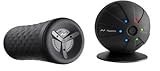
The Hyperice Vyper 2.0 is the category standard — three vibration frequencies, rechargeable battery, and a textured surface that combines mechanical vibration with the rolling motion for genuinely accelerated muscle recovery. Used by professional sports teams and elite athletes across every sport, it’s not marketing language: the vibration meaningfully reduces the guarding response that limits standard rolling effectiveness.
For a more affordable vibrating option, the Theragun Wave Roller — made by the same brand as the Theragun percussive massager — offers five vibration settings and Bluetooth control through the Therabody app at a mid-range price point. Less powerful than the Vyper but more customizable for athletes who want to adjust intensity per muscle group.


Last update on 2026-09-18 / Affiliate links / Images from Amazon Product Advertising API


Last update on 2026-09-18 / Affiliate links / Images from Amazon Product Advertising API
Sport-specific foam rolling — what to prioritize by activity
Runners should focus on calves, IT bands, quads, hamstrings, and glutes — in that priority order. These are the muscle groups that accumulate the most tightness from repetitive road impact and are directly linked to the most common running injuries: IT band syndrome, patellofemoral pain, and plantar fasciitis. A TriggerPoint Grid paired with a massage stick for IT band and calf work covers virtually everything a runner needs.
Cyclists — particularly indoor trainers and Zwift riders — develop chronic tightness in the hip flexors, quads, and thoracic spine from the static position. Hip flexor rolling (lying face down on the roller at hip level) and thoracic extension (lying perpendicular to the roller across the upper back) are the two most impactful additions to a cyclist’s rolling routine.
Golfers carry tightness in the thoracic spine, lead hip, and trail shoulder from the rotation demands of the swing. Thoracic mobility rolling — extending back over the roller at each vertebral level of the upper back — directly improves rotation range of motion and swing efficiency. This is one of the highest-return rolling habits for golfers.
Skiers accumulate quad, glute, and lateral hip tightness from the eccentric loading and lateral demands of turns. The TFL (tensor fascia latae) — the muscle connecting the glutes to the IT band — is particularly prone to tightness in skiers and responds well to targeted rolling with a ball or compact textured roller.
Pickleball players should prioritize calf and Achilles rolling given the explosive lateral movements and frequent direction changes, plus thoracic rotation work for shoulder health and swing mechanics.
Complete athlete recovery kits
A foam roller is the foundation, but a complete recovery kit adds the tools for muscle groups a roller can’t reach effectively. A massage ball for glutes, plantar fascia, and shoulders; a massage roller stick for IT bands and calves; and a stretching resistance band for hip flexor and hamstring mobility work covers virtually every recovery need across all sport types.


Last update on 2026-09-18 / Affiliate links / Images from Amazon Product Advertising API
Recovery tools and structured training across every sport
Foam rolling maintains the tissue quality that keeps you training. Structured sport-specific training programs build the fitness and skill that make the training worthwhile. Whether you run, cycle, golf, ski, or play pickleball, our review pages cover the most popular training apps for everyday athletes:
- Dynamic Runner Club review — for runners building structured mileage
- Dynamic Cyclist review — for cyclists training with purpose indoors and out
- Dynamic Golfer review — for golfers improving mobility and swing mechanics
- Dynamic Skier review — for skiers building off-season ski-specific fitness
- Dynamic Pickleball Club review — for pickleball players developing their game with structure