
You can have the strongest legs in your cycling group and still be losing power with every pedal stroke — because tight hip flexors pull your pelvis out of position and force the wrong muscles to do the work. It’s one of the most common and underappreciated limiters in cycling fitness, and it affects riders at every level, from weekend enthusiasts to competitive racers.
Spending hours in a forward-flexed position on the bike progressively shortens the hip flexors — particularly the psoas and iliacus. Over time, this leads to anterior pelvic tilt, reduced glute activation, and a pedal stroke that relies too heavily on the quads and hip flexors themselves rather than distributing load efficiently. The result isn’t just discomfort; it’s a measurable drop in power output and an increased risk of knee, lower back, and hip injuries. Addressing this is central to any serious cyclist conditioning program.
Why Bike Position Alone Won’t Fix the Problem
Many riders try to solve hip flexor tightness by adjusting saddle height or cleat position, and while bike fit matters, it can’t compensate for muscular imbalances that exist off the bike. If your psoas is chronically shortened, your pelvis will tilt forward regardless of how your saddle is set. A good fit can reduce stress on the system, but it doesn’t restore length or improve neuromuscular control.
The fix has to happen away from the bike through deliberate mobility and strength work. That means lengthening the hip flexors through sustained stretching and targeted movement, then strengthening the opposing muscles — primarily the glutes and deep core — so they can hold the pelvis in a neutral position under load. This is the foundation of effective cycling strength work, and it’s where most riders skip steps.
Where to Start: Daily Hip Flexor Habits
- 90/90 hip stretch: Hold for 60–90 seconds per side after every ride. This position targets both the hip flexors and external rotators simultaneously.
- Couch stretch: One of the most effective ways to address the rectus femoris, which crosses both the hip and the knee. Do this 3–4 times per week.
- Standing psoas lunge stretch: With a posterior pelvic tilt actively held (tuck the tailbone), hold for 45–60 seconds. Passive stretching without engaging the core is far less effective.
- Dead bugs: Not a stretch — but essential for training core stability while the hip flexors are under light load.
Reactivating the Glutes for a Stronger Pedal Stroke
When the hip flexors are dominant and shortened, the glutes tend to become underactive — a pattern sometimes called reciprocal inhibition. You won’t necessarily feel this as weakness; the quads and hamstrings compensate and you keep moving. But you’re leaving a significant amount of power on the table and putting excess strain on structures that weren’t designed to carry that load continuously.
Glute activation work before rides isn’t just a warm-up ritual — it’s a way to reestablish the neuromuscular connection that sitting and poor posture have dulled. Banded clamshells, glute bridges with a 2-second pause at the top, and single-leg Romanian deadlifts are all evidence-supported ways to bring the glutes back online. Do them before you clip in, not as an afterthought post-ride when fatigue has already set in.
The pedal stroke is a chain reaction. If the hip flexors are locked short and the glutes are asleep, the chain is broken before you even apply force — no amount of interval training fixes that upstream problem.
Building Long-Term Mobility Into Your Bike Training
Short-term relief from stretching is real, but lasting change comes from consistent, progressive work done over weeks and months. Think of hip mobility as a training variable just like aerobic capacity — it needs progressive overload, frequency, and recovery. One stretch session after a long ride won’t move the needle. Three to four targeted sessions per week, built into your regular bike training schedule, will.
Pairing mobility work with cyclist conditioning exercises that reinforce movement patterns — single-leg squats, step-ups, hip hinges — creates functional range of motion, not just passive flexibility. The goal is a hip that can move through its full range under load, which is exactly what an efficient, powerful pedal stroke demands.
If you want a structured approach to cycling fitness that integrates hip mobility, glute activation, and off-bike strength work into a coherent program, take a look at this breakdown: Dynamic Cyclist — Full Program Review.

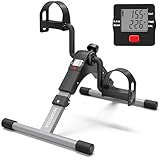

Last update on 2026-09-20 / Affiliate links / Images from Amazon Product Advertising API
Keep Reading:
Affiliate links — we may earn a small commission at no extra cost to you.