
Why indoor cycling shoes are different from road shoes
Indoor cycling creates conditions road shoes aren’t designed for. Without wind to cool your feet, temperatures inside a cycling shoe during a hard Zwift session or spin class climb quickly — road shoes with small ventilation perforations simply can’t expel heat fast enough. The result is hot spots, discomfort, and in some cases numbness that forces you to cut sessions short.
Indoor-specific cycling shoes address this with aggressive open mesh uppers, ventilated soles, and moisture-wicking liners that manage heat and sweat in ways road shoes don’t need to. They also prioritize walkability — recessed 2-bolt SPD cleats that don’t clatter on hard floors — which matters when you’re walking from your pain cave to the kitchen or across a gym studio. This guide covers what to look for and the best options for every type of indoor rider.


Last update on 2026-09-20 / Affiliate links / Images from Amazon Product Advertising API
Cleat compatibility — the first thing to sort out
Before anything else, you need to know which cleat system your pedals use. Getting this wrong means shoes that won’t clip in at all.
SPD (2-bolt) is the most common system for indoor cycling. Virtually all spin studio bikes — Keiser, Stages, Echelon, and most gym spin bikes — use SPD or SPD-compatible pedals. Smart trainers with stock pedals are typically also SPD. The cleats are small, recessed into the sole of the shoe, and easy to walk in. If you’re buying shoes primarily for spin class or a home trainer without a specific road pedal, SPD is the safe default.
Look Delta (3-bolt) is used on Peloton bikes specifically. If you ride a Peloton, you need Look Delta compatible shoes — SPD shoes will not clip in. Peloton sells its own shoes, and several other brands make Delta-compatible options.
SPD-SL (3-bolt) is the road racing standard used on most road bike pedals (Shimano, Look Keo compatible). If you’re using a smart trainer with your road bike and its existing pedals, SPD-SL compatible road shoes work perfectly. They’re less walkable than SPD shoes but deliver the stiffest sole and best power transfer.
Dual-compatible shoes — with mounting holes for both 2-bolt and 3-bolt cleats — give you the flexibility to use the same shoe across different setups. The Giro Cadet is the most recommended dual-compatible indoor option.
Key features for indoor cycling shoes
Ventilation is the most important feature for indoor use and the area where indoor-specific shoes differ most from road shoes. Look for open mesh uppers — not just perforations — that allow genuine airflow. Ventilated soles with channels or openings underneath add meaningful heat dissipation. For Zwift sessions of 60–90 minutes, the difference between a well-ventilated shoe and a poorly ventilated one is noticeable from around the 30-minute mark.
Walkability determines how practical the shoes are outside of the actual riding. SPD cleats sit recessed below the sole surface, which means you can walk normally on hard floors without the cleat clicking and sliding. Road shoes with exposed SPD-SL or Look Delta cleats are essentially unwalkable — you shuffle like a penguin and risk slipping on smooth floors. If you’re going to a spin studio, commuting to your trainer, or walking between rooms in your home, walkability is a real practical concern.
Sole stiffness affects power transfer. A stiffer sole transmits more of your pedal effort directly to the drivetrain rather than flexing and absorbing energy. Carbon soles are the stiffest — worthwhile for performance-focused Zwift racers and structured interval training. Nylon composite soles are slightly less stiff but meaningfully cheaper and perfectly adequate for most indoor training. For casual spin class use, sole stiffness is largely irrelevant.
Closure system — velcro straps, BOA dials, or ratchet buckles — all work well for indoor use. BOA dials allow micro-adjustment during a ride without stopping. Velcro is the simplest and cheapest. Ratchet buckles provide firm, even closure. For indoor training where you’re not battling mud or dealing with gloves, any closure system works; choose based on personal preference and budget.
Best cycling shoes for spin class
Spin studio shoes need to be comfortable for extended wear, walkable between the changing room and the bike, and compatible with the studio’s pedal system — almost always SPD. They don’t need to be high-performance racing shoes; comfort, breathability, and ease of use matter more than sole stiffness at this level.
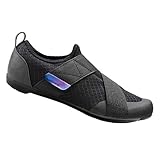
The Shimano SH-IC501 is the most consistently recommended spin class shoe. Lightweight, sock-like fit, single velcro strap for quick on/off, recessed SPD sole for easy walking, and good ventilation through the mesh upper. Anti-odor lining is a practical bonus for gym bag hygiene. Available in multiple sizes and both men’s and women’s fits.
The Shimano SH-IC100 is the budget step down — the same SPD compatibility and walkable sole at a lower price point. Less breathable than the IC501 but perfectly functional for moderate session lengths.

Last update on 2026-09-20 / Affiliate links / Images from Amazon Product Advertising API
Best cycling shoes for Peloton
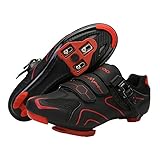
Peloton bikes use Look Delta pedals, which require 3-bolt Delta-compatible shoes. Peloton’s own branded shoes are the simplest option — designed specifically for the bike, the cleats are included, and the fit is optimized for Peloton’s pedal system. For riders who want third-party options, any Look Delta-compatible road cycling shoe works, though walkability in these shoes is limited compared to SPD options.


Last update on 2026-09-20 / Affiliate links / Images from Amazon Product Advertising API
Best cycling shoes for Zwift and smart trainer use
Zwift and smart trainer riders have more flexibility than spin class users — you’re typically in a controlled home environment where walkability matters less and performance matters more. Many serious Zwift riders use their regular road shoes on the trainer. However, dedicated indoor shoes have one practical advantage: they protect your good road shoes from the excessive sweat that accumulates in static indoor conditions, which accelerates sole delamination and upper degradation over time.
The Shimano IC5 (also referred to as SH-IC501) is the top recommendation for Zwift use — open mesh upper, aggressive ventilation, SPD compatibility for most smart trainer setups. For riders using their road bike on the trainer with existing SPD-SL road pedals, any well-ventilated road shoe works — the Giro Cadet dual-compatible option covers both indoor and outdoor use without compromise.
For performance-focused Zwift racers who want maximum power transfer, road cycling shoes with a full carbon sole — used with the bike’s existing road pedals — deliver the stiffest platform available. The trade-off is reduced walkability and faster sweat-related wear.


Last update on 2026-09-20 / Affiliate links / Images from Amazon Product Advertising API
Do you need cycling shoes at all for indoor training?
Technically no — most indoor bikes and smart trainers can be used with regular athletic shoes on flat or cage pedals. But the performance difference is significant enough that it’s worth understanding. Clipless pedals lock your foot in a fixed, optimal position and allow you to apply power through the full pedal stroke — both the push down phase and the pull-up phase. Flat pedals with athletic shoes only use the push-down phase, which is measurably less efficient at higher power outputs.
For casual spin class use a few times per week, flat pedals are fine. For anyone training seriously on a smart trainer — following structured intervals, racing on Zwift, or building cycling fitness — clipless shoes and pedals are a worthwhile investment that pay dividends in every session.


Last update on 2026-09-20 / Affiliate links / Images from Amazon Product Advertising API
Indoor shoes and structured training
The right shoes make every indoor session more efficient. The right training program determines what you do in those sessions. Our Dynamic Cyclist review covers one of the most talked-about cycling training apps for everyday riders — covering structured workouts, mobility, and progressive training that translates directly to better performance both indoors and out.