
Do golf training aids actually work?
The honest answer is: some do, most don’t. The golf training aid market is full of gimmicks that promise to fix your slice in five minutes, and the majority of them end up collecting dust in a garage after a handful of uses. But a small category of well-designed, purposeful aids genuinely accelerate improvement — and those are the ones worth your money.
The difference between a useful training aid and a waste of money comes down to one thing: feedback. A good training aid shows you instantly when you’ve done something wrong and what it felt like when you did it right. If you have to guess whether the aid is working, it isn’t. Every product in this guide meets that standard.
Swing trainers — fix tempo, lag, and path at home
Swing trainers are the most versatile category of home practice aid because you can use them indoors with a full swing motion. They don’t require a net or a hitting surface — just enough ceiling height and room to swing. The best ones build muscle memory for tempo, lag, and swing path, which are the three fundamentals that separate consistent ball strikers from inconsistent ones.
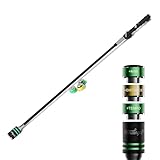
The Orange Whip is the most widely recommended swing trainer among tour professionals and club golfers alike. It uses a counterweighted, flexible shaft that forces you to synchronize your arm swing with your body rotation — the core of a repeatable tempo. Ten minutes a day with the Orange Whip before a round produces measurable improvement in swing smoothness and balance. It’s also one of the few training aids that works as a warm-up tool on the first tee.
The Lag Shot takes a different approach — it’s a full 7-iron with an extremely flexible shaft that physically prevents you from casting the club from the top. If you cast, the shaft buckles. If you lag properly, it snaps through impact. The feedback is impossible to miss, which is exactly what you want from a training aid.
The SKLZ Gold Flex is the budget option in this category. It does the same basic job as the Orange Whip at a lower price point — weighted, flexible shaft for tempo training. It’s heavier than you expect out of the box, which is part of the point. A solid choice for golfers who want the fundamentals without the premium price.




Last update on 2026-04-06 / Affiliate links / Images from Amazon Product Advertising API
Putting aids — the fastest way to lower your scores
Putting accounts for roughly 40% of strokes in a typical amateur round. It’s also the area of the game you can practice most effectively at home, with no range trip required. A good putting mat and one or two targeted aids can translate directly into fewer three-putts and more confident short putts within a few weeks of consistent practice.
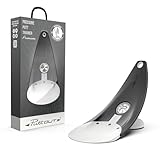
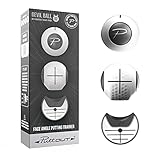
The PuttOut Pressure Putt Trainer is one of the simplest and most effective putting aids available. It uses a parabolic return ramp — putt with perfect pace and the ball returns to you. Putt too hard and the ball rolls back past the hole. It teaches distance control through instant, honest feedback. Portable, inexpensive, and usable on any surface.
A putting mat is the foundation of any home putting practice setup. Look for one that simulates a realistic green speed (around stimp 10–11), has alignment guides, and rolls flat for storage. The combination of a quality mat and the PuttOut trainer covers most of what you need to work on in short game practice at home.
Putting mirrors — a flat mirror with alignment lines that you set up on the floor — are used by tour professionals for a reason. They show you immediately whether your eyes are over the ball, whether your shoulders are square, and whether your putter face is aligned at address. These are the three most common setup errors in recreational putting, and a mirror reveals all three in a single glance.


Last update on 2026-04-06 / Affiliate links / Images from Amazon Product Advertising API

Last update on 2026-04-06 / Affiliate links / Images from Amazon Product Advertising API
Alignment and strike aids — fix the fundamentals fast
Poor alignment and poor ball striking are the two most common causes of high scores in recreational golf, and both can be diagnosed and corrected without leaving home.
Alignment sticks are the most versatile and underrated tool in golf. Tour professionals use them every single range session. Two sticks on the ground give you instant feedback on foot alignment, ball position, swing path, and hip turn. Every golfer at every level should own a set. They’re also inexpensive enough that this is a no-brainer purchase.
The Divot Board addresses ball striking directly. Place it on the mat, put a ball on the tee position, and your divot pattern tells you exactly where your club is bottoming out. Fat shots, thin shots, heel and toe misses — all of them show up immediately in the contact mark. It’s one of those training aids that makes you realize how inconsistent your ball striking actually is, which is an uncomfortable but necessary first step to fixing it.
Grip trainers are worth considering if you’ve been told your grip is a problem. A moulded grip attachment that slides onto your club and guides your hands into the correct position builds muscle memory faster than trying to hold a mental image of grip position during your swing.


Last update on 2026-04-06 / Affiliate links / Images from Amazon Product Advertising API


Last update on 2026-04-06 / Affiliate links / Images from Amazon Product Advertising API
Practice nets — full swing training in your backyard
A practice net is the one purchase that transforms how much you can practice at home. With a net in the backyard, you can hit full shots with any club, any day, without driving to the range. The upfront cost pays for itself quickly in range fees saved.
What to look for in a practice net:
- Size — minimum 7 feet high and 7 feet wide for full driver swings. Larger is always better if you have the space.
- Netting quality — multiple layers of knotted netting absorb impact better than single-layer designs. Check the warranty — quality nets offer at least one year against defects.
- Frame stability — the frame needs to stay in place on impact with a driver. Fiberglass poles with ground stakes are more stable than plastic poles with base plates on grass.
- Portability — if you want to take it down seasonally or move it, check the assembly time. Most quality nets set up in under 20 minutes.
A net paired with a hitting mat and a launch monitor gives you a complete home practice setup that rivals a range session for full-swing improvement.


Last update on 2026-04-06 / Affiliate links / Images from Amazon Product Advertising API
Launch monitors — data-driven practice at home
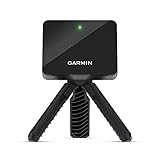
Launch monitors have come down dramatically in price over the last few years. Entry-level devices that cost thousands of dollars five years ago now have capable competitors at $200–$500. For golfers who want to practice with purpose rather than just beating balls, a launch monitor adds a layer of accountability and feedback that transforms home practice sessions.
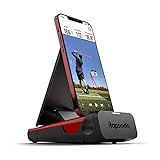
At minimum, a launch monitor tells you ball speed, estimated carry distance, and launch angle — enough to track whether your swing changes are actually producing different results. Mid-range devices add club speed, smash factor, and spin rate. The Swing Caddie SC300i and Rapsodo MLM2PRO are the most frequently recommended options at the $200–$500 price point for recreational golfers.

Last update on 2026-04-06 / Affiliate links / Images from Amazon Product Advertising API
Getting the most from your practice time
The best training aids in the world won’t lower your handicap without a structured approach to how you practice. Random ball-beating — hitting driver after driver into a net without a specific focus — builds bad habits as efficiently as it builds good ones.
Purposeful practice means identifying one specific area to work on per session, using the appropriate aid to get feedback on that area, and finishing each session with a few shots that simulate on-course pressure. Ten focused minutes beats an hour of aimless swinging every time.
If you want a structured program that takes the guesswork out of golf-specific training and mobility work — the kind of practice that complements everything you’re doing with these aids — our Dynamic Golfer review covers one of the most popular training programs for everyday golfers who want to play better without a full-time coach.